Showing posts with label 2dbhUnit6. Show all posts

Wednesday, 25 May 2016

RADIO PROGRAMME EDITING & recording audio clips


1. GRABATZEN IKASTEKO BALIABIDEAK:
 RESOURCES TO RECORD A CLIP: 

http://es.ccm.net/faq/2654-unir-canciones-gratis-mp3-wav-wma

http://www.educacontic.es/blog/como-cortar-y-unir-fragmentos-de-audio-online

http://www.nch.com.au/wavepad/es/


2. sound effects 

http://soundbible.com/

http://movie-sounds.org/      If you are looking for a famous movie clip, just give the website a                                                           chance!
http://www.televisiontunes.com/

http://www.soundjay.com/

http://topsounds.org/en#.V0Xzufntmko

https://www.freesound.org/       you need to login in this one  

http://www.purple-planet.com/home/4583818248     music clips

http://musicmuse.xyz/country-music


3. audacity 

Behin zuen grabazioak eta soinu efektu batzuk deskargatu eta gero, Audacity programarekin beharko dituzue guztiak batu. Honela ahalik eta grabazio txukunenena lortzen saiatuko gara.  

Wednesday, 29 October 2014

QUANTIFIERS


Nola esaten da ingeleraz, liburu asko, liburu gutxi, nola esango zenuke azukre asko, edo esne gutxi ? Bideoan oso ongi azalduta dator baina hemen jakin beharreko gutxienekoa:

 · Badira ingeleraz kontagaitzak deitzen ditugun izen batzuk: adibidez azukrea, esnea, dirua (ezin baita esan esne bat, bi diru, hiru azukre, etabar).
Hauek dira UNCOUNTABLE NOUNS. Hauekin zera erabiliko dugu:

                              · Diru ASKO =  A LOT OF  money. I have a lot of money
                                                                                         I don´t have much money.
                              · Diru gutxi= LITTLE money

· Badira ingeleraz kontagarriak diren izenak: adibidez lagunak (lagun, bat, bi, hogeitabi, etabar) edo liburuak, edo ikasgaiak ...Hauei COUNTABLE noun izena ematen zaie:
                               · Lagun asko= MANY friends
                               · Etsai gutxi= A FEW enemies/ FEW enemies
Bai kontagaitzak bai kontagarriak A LOT OF-ekin erabiltzen ahal dira:
                                · A LOT OF money
                                · A LOT OF friends


OK, that´s all folks! Remember to enjoy live, there is not much time!


 http://www.myenglishpages.com/site_php_files/grammar-exercise-quantifiers.php#.VQggnHktFdh


 http://www.grammarbank.com/quantifiers-exercises.html


Quiz created by AzLanguage House with ExamTime

http://www.eslvideo.com/eslvideo_quiz_lowint.php?id=22074

http://www.eslvideo.com/eslvideo_quiz_lowint.php?id=22074

Wednesday, 30 October 2013

2dbh.PAST SIMPLE OR PRESENT PERFECT?

2dbh. PAST SIMPLE or

PRESENT PERFECT?


It is extremely important to know the diference between the two tenses. Just to remind you the differences between them, I would point out two ideas: 

Present Perfect:   

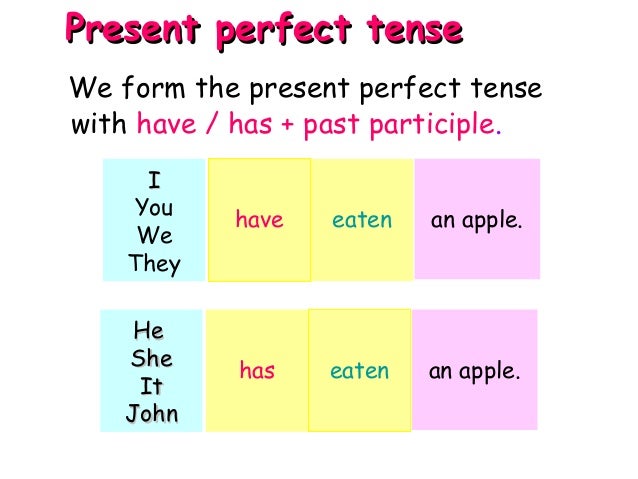
              It is formed by: SUBJECT+ HAVE/HAS+ PAST PARTICIPLE

                 It is used to talk about actions that where done in the past but have a consequence in
                 the present. It is also used with adverbs of time like for/since/ever/never/before, etc. 
 
                 Example: 
                  
                 · I´m not hungry because I have eaten an apple before (ez naiz gose, lehen jan 
                   baitut sagar bat; sagarra jateak eragina du, orain nik goserik ez izatean).

Past simple: 

              It is formed by: SUBJECT+ PAST SIMPLE OF THE VERB

             It is used to talk about a completed action that happened in the past.
             Sometimes it is accompanied by adverbs of time like yesterday/last Monday/in 1999, etc. 
             (the action happened in the past and we are refering when it happened, contrary to the                          present perfect, with which we don´t make references to the time when the action 
             happened).


                Example:
               · I went to Catalunya in the summers of 1998 and 1999. (Noiz esaten duenez eta ekintza
                 bukatua denez, orainaldiarekin erlazionatzen ez dugunez,  Past Simple darabilgu).   
                         · I have been to Catalunya twice. (nire bizitza osoan bitan izan naiz, ez dut NOIZ                                     esaten eta horregatik erabiltzen da Present Perfect).


            Hemen uzten dizuet, guzti hau modu praktikoan erabiltzeko webquest polit bat. Have fun!

http://www.englishexercises.org/makeagame/viewgame.asp?id=3365


PRESENT PERFECT WEBQUEST: 

http://www.createwebquest.com/belens2010/i-have-visited-beautiful-places

PRESENT PERFECT QUIZZES: 

https://www.usingenglish.com/quizzes/290.html


BRITISH CULTURE

https://create.kahoot.it/share/duplicate-of-british-culture/0924078c-d2ba-441b-8609-a5925e4368e1 Capitals, nation, etc.GGGGGGGGGGGGGGGGGGGG...